Plant-derived caffeine and guarana: write a clearer brief
Tea-derived caffeine describes a source.
Source and active content answer different questions
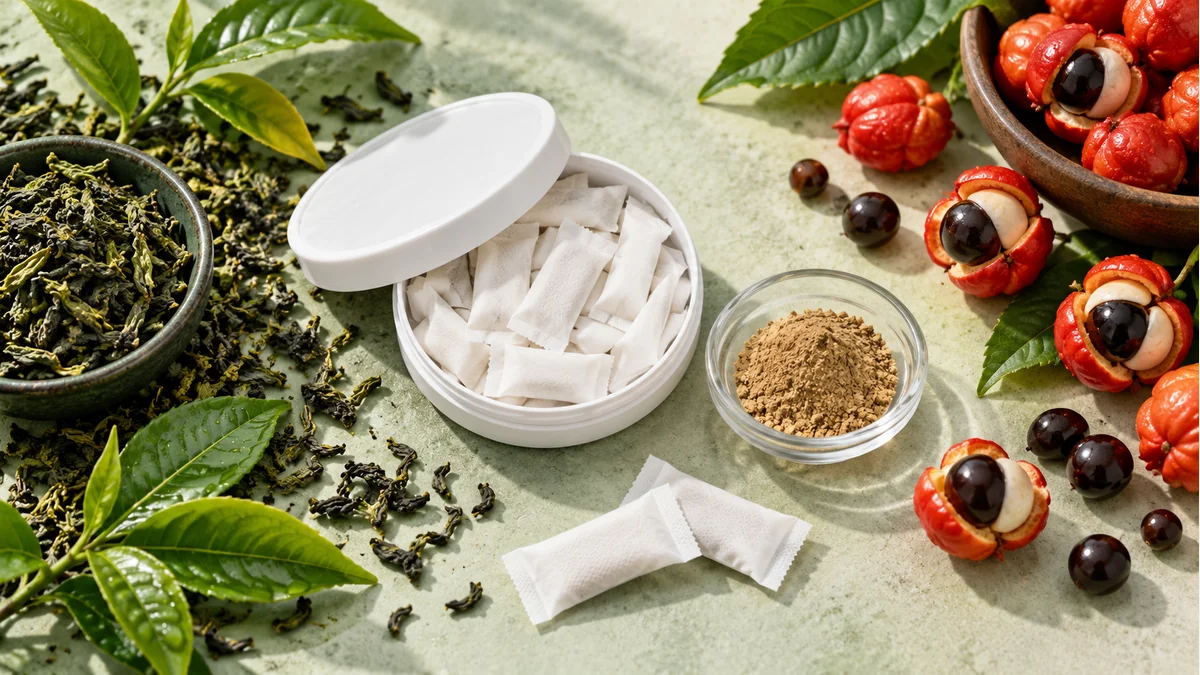
Tea-derived caffeine describes a source. Guarana describes a botanical input that can contribute caffeine alongside other material. A purchasing brief should record both the ingredient addition rate and the total caffeine contribution rather than substituting one for the other. A natural-source preference is not itself a safety specification.
Ask how the total is established
When more than one caffeine-bearing ingredient is proposed, ask how their contributions are calculated and checked. Keep the source specification, ingredient lot records and relevant finished-product testing connected. A label amount should not be guessed from the weight of an extract with an unknown standardization.
Compare sensory and documentation differences
A guarana extract can differ from a purified caffeine input in color, bitterness, carrier and particle behavior. Review complete prototypes made with the proposed materials. Ask for identity and appropriate assays, then confirm how ingredient-lot variation will be managed if a sample is scaled up.
Keep comparisons within the evidence
Do not assume a botanical source is gentler, longer lasting or faster acting. Those are separate performance and safety questions. For an adult energy or focus concept, review intended exposure and destination requirements before strength and label language are approved. Use the caffeine and guarana category pages as separate technical starting points.
Use this in your project brief
- Identify which decisions are approved and which still need review.
- Keep the formula, pack, testing and quotation versions connected.
- Assign a responsible reviewer before an unresolved assumption becomes a label or order requirement.
Explore the product categories, review OEM/ODM services or send a project inquiry with the details you already know.