
Energy Pouches private label: a buyer’s specification guide
What to include in your energy pouches brief: ingredient direction, samples, testing, can format, MOQ and quotation comparisons.
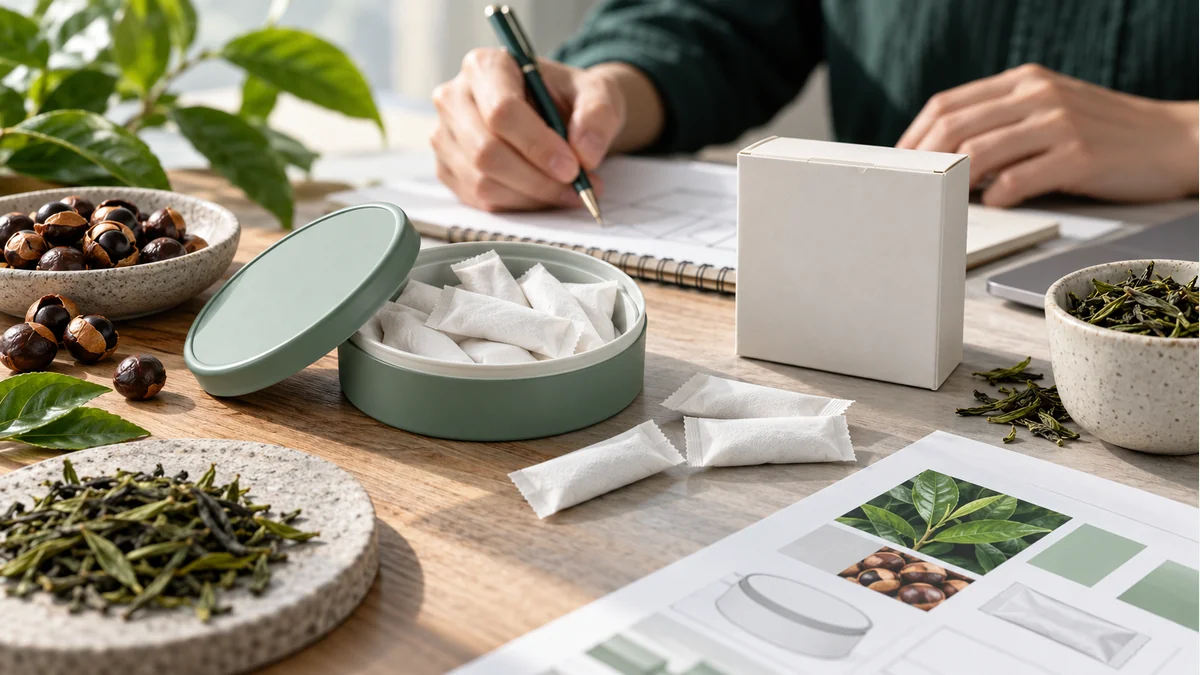
A useful private label inquiry for energy pouches starts with the product specification, the intended destination and the quantity per SKU. Compare proposals on those facts before making a decision about a supplier. An energy concept must identify whether it contains caffeine. List all stimulant sources and keep the active amount separate from the ingredient addition rate.
Decide what the product needs to be
Caffeine-bearing botanical inputs, optional nutrient ingredients and a flavor system assessed for the intended market. Define the required source and ingredient form in the brief. If your brand has an exclusion list, a nicotine-free requirement or a preferred carrier, state it before a sample is prepared. Otherwise, two similar-looking prototypes can represent different products.
Record the category-specific questions
Balance guarana or tea bitterness against citrus, cooling or other adult flavor directions. The evaluation sheet should separate appearance, flavor character, physical comfort and relevant analytical targets. A preference for one flavor does not establish stability, content uniformity or clinical performance. Keep those questions in their own test plan.
Compare the pack and quantity on equal terms
State whether the quotation covers individual pouches, filled cans or retail-ready cartons. Record pouches per can, cans per SKU, number of flavors, artwork versions and secondary packaging. At HerbalPouches, the production minimum is 3,000 cans per SKU and 9,000 cans per order. Record both requirements in the brief and quotation.
Ask for evidence that matches the actual formula
Total caffeine, relevant nutrient assays, blend homogeneity and packaging compatibility. Request the analytical method, sample identity, acceptance limits and batch identification. A raw material COA should not be described as a finished-product test. Confirm which documents will accompany a sample and which will be available for the manufactured batch.
Use a written approval gate
Before moving to an order, match the approved formula, reference sample, can drawing, label artwork and quotation revision. Assign responsibility for the destination review and any required label changes. Document who approves ingredient substitutions and how a material or process change will be communicated.
What should the first inquiry include?
- Destination country and planned business channel.
- Energy Pouches ingredient direction and target amount for review.
- Flavor, pouch format and packaging requirements.
- Quantity per SKU, SKU count and target timing.
- Tests, documents and confidentiality needs.
Searches for the best energy pouches, bulk energy pouches or wholesale energy pouches all lead to the same practical question: which proposal matches your actual specification and evidence requirements? A ranking or a low advertised number is not a substitute for that review.
Explore energy pouches development, review the OEM/ODM service or send your brief.