
Caffeine pouches vs energy drinks: a procurement comparison
A pouch and a drink are different formats with different formulations and instructions.
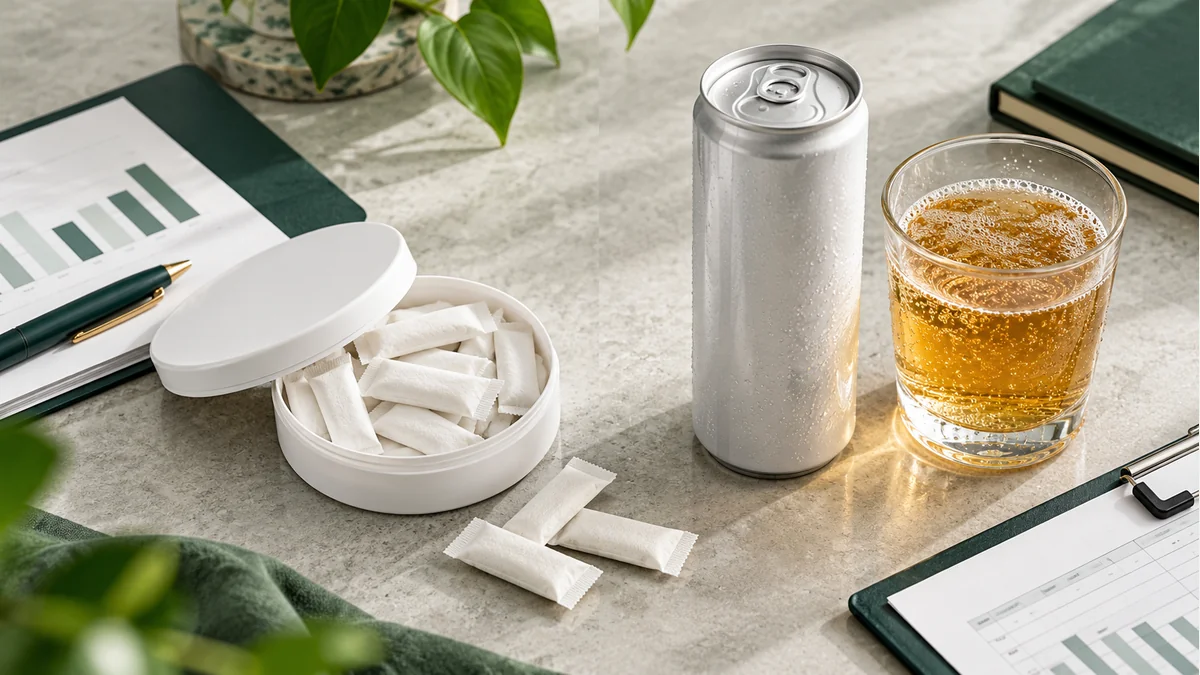
Compare measured composition first
A pouch and a drink are different formats with different formulations and instructions. Compare the actual ingredient amounts and total caffeine contribution rather than assuming that one can of pouches corresponds to one beverage. Serving language and intended use need to be defined for each product.
Treat absorption and duration as separate claims
A convenient or discreet format does not automatically establish faster action, longer duration or a clinical advantage. Ask what evidence supports the exact statement being proposed for the finished product. Research on another formula or delivery route should not be transferred without assessment.
Consider packaging and distribution questions
The product routes have different can, liquid, pouch, storage and transport requirements. Compare packaging components, net quantity, release documents and destination classification on their own terms. A purchasing decision should include those operational details as well as the flavor concept.
Keep adult safety context visible
Caffeine from all sources contributes to exposure. Botanical caffeine is still caffeine, and a small product can contain a meaningful amount. This website does not recommend a personal dose or market caffeinated concepts to children. Use an appropriate safety and destination review before approving strength or artwork.
Use this in your project brief
- Identify which decisions are approved and which still need review.
- Keep the formula, pack, testing and quotation versions connected.
- Assign a responsible reviewer before an unresolved assumption becomes a label or order requirement.
Explore the product categories, review OEM/ODM services or send a project inquiry with the details you already know.