
Caffeine Pouches: ingredients, quality and claim questions
How to review the ingredient identity, active amount, sensory behavior, test scope and proposed claims behind caffeine pouches.
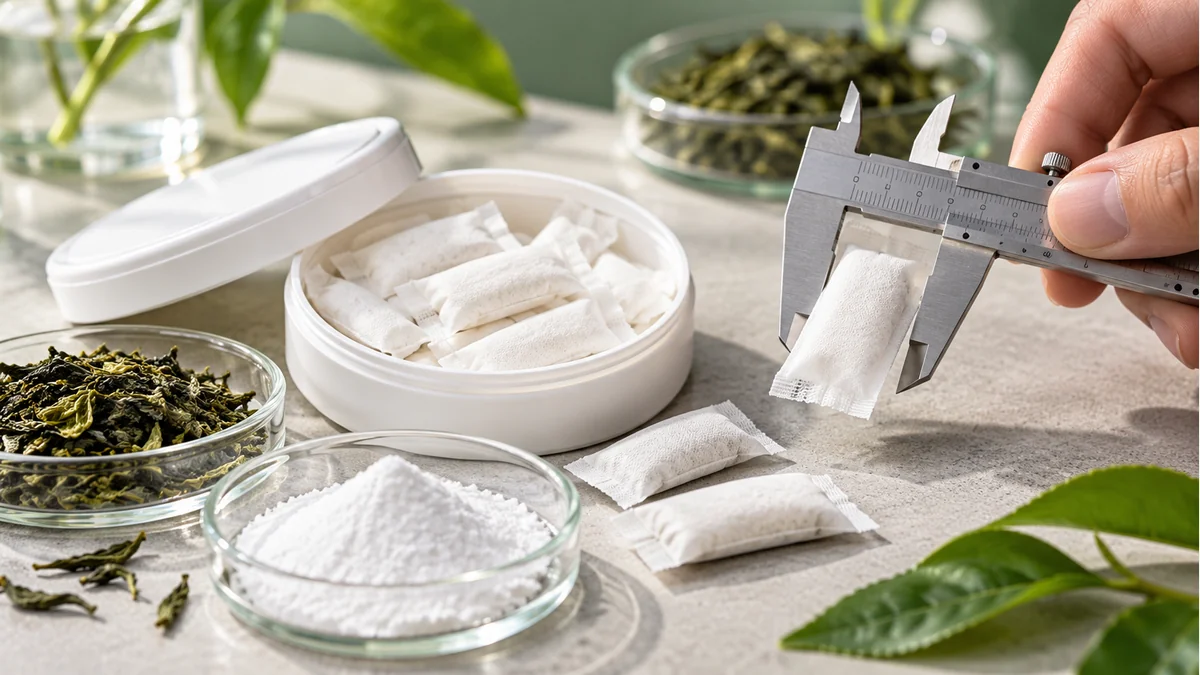
For caffeine pouches, the ingredient name is only the beginning of a quality review. Specify total caffeine per pouch from every ingredient, not only the added caffeine. Tea extracts and guarana can add to the same total.
Identify the material behind the category name
Green-tea-derived caffeine or a documented alternative caffeine source; flavor, carrier and sweetener chosen as a complete formula. Ask the supplier to distinguish the trade name from the technical identity. Where applicable, record species, plant part, extract process, carrier and standardized content. Those details help distinguish an actual ingredient specification from a broad marketing description.
Keep amount and analytical meaning separate
The weight of an extract or nutrient input is not always the same as the amount of the declared active. A usable specification names the quantity being measured, the unit and the test method. Ask whether the stated figure is an input calculation, an ingredient result or a measured finished-product value.
Review the finished pouch, not just the raw material
Tea bitterness, cooling intensity and a consistent pouch feel should be assessed together. Packaging, conditioning and storage can change the sensory result. Review a sample made with the proposed carrier, pouch material and can system. Use a defined evaluation period and record the sample version so a later revision can be compared fairly.
Choose a relevant quality scope
Identity, caffeine assay, fill-weight variation and an agreed finished-pouch release method. Agree whether additional tests are needed for the proposed input and market. A document package should be specific enough to show which material was tested and what the result means. It should not turn a general certificate into a claim about every SKU.
Keep the label within the evidence
Caffeine is a stimulant. This is adult B2B development information; it is not a recommendation for children, pregnancy or people with caffeine sensitivity. A published study of an ingredient or another delivery format does not automatically support the same statement for a new oral pouch. Source language, product classification, permitted claims and safety information should be reviewed together before artwork is approved.
Questions to carry into a supplier call
- What exact material and source will the prototype use?
- What is being measured, and on which sample?
- Which sensory and stability questions remain open?
- What changes need approval before production?
- Which statements can the actual evidence support?
Use these questions alongside the caffeine pouches category specification and the quality document checklist. For a project-specific review, contact the development team.